
Designing daylight:
Svensson
The daylight a curtain leaves is part of the design.
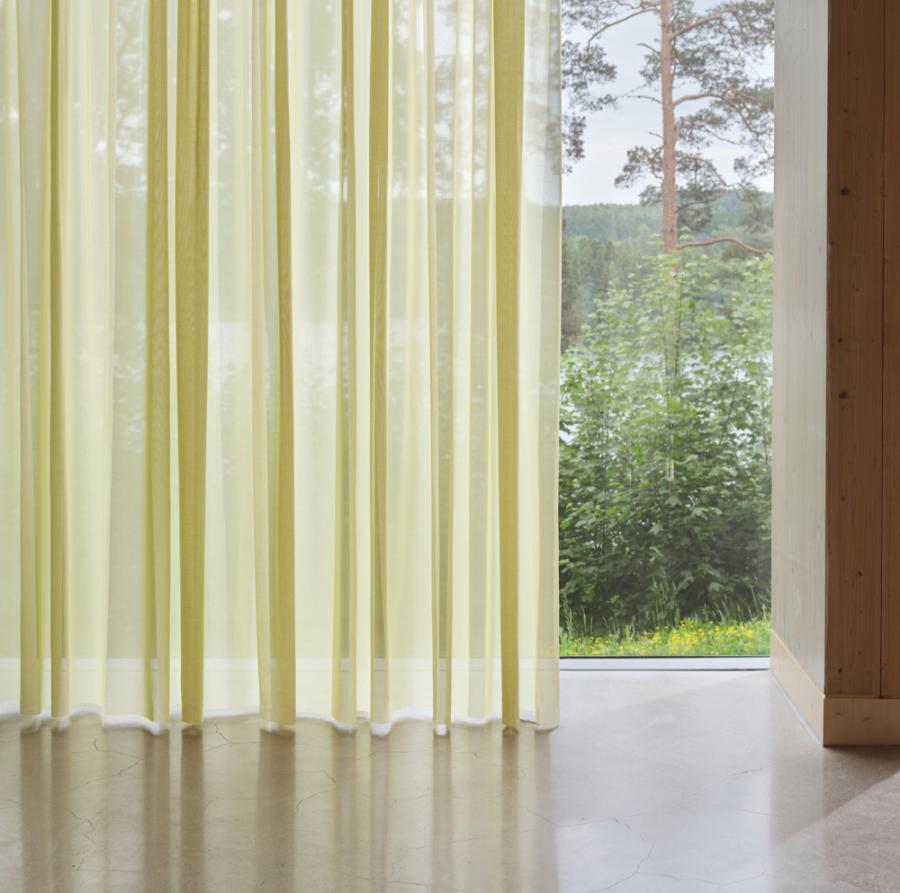
Framing a room with the right hanging fabrics is designing the experience of the room, just like colour, material, and furniture do.
Svensson
Design is a visual industry. As Principles of Neural Science puts it, “Most of our impressions about the world and our memories of it are based on sight.” In a room, daylight shapes what is seen.
Curtains are chosen for colour, texture and drape, and specified for fire and sound. Their daylight is judged by eye, while blinds usually come with a number. Svensson gives its curtains three laboratory-tested daylight scores, a more systematic way to choose.
Three scores for daylight control, 0 to 4
Svensson has its curtains tested by an independent laboratory to EN 14501, the European standard for visual comfort. Each score runs from 0, very little effect, to 4, a very good effect:
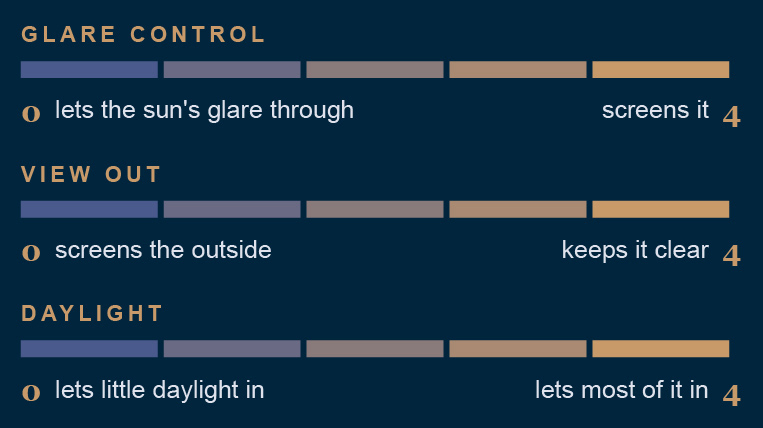
Each score serves the people in the room: glare control keeps a bright window comfortable to work beside, a view out helps them orient themselves, and daylight supports the body’s internal clock.
Colour influences the score
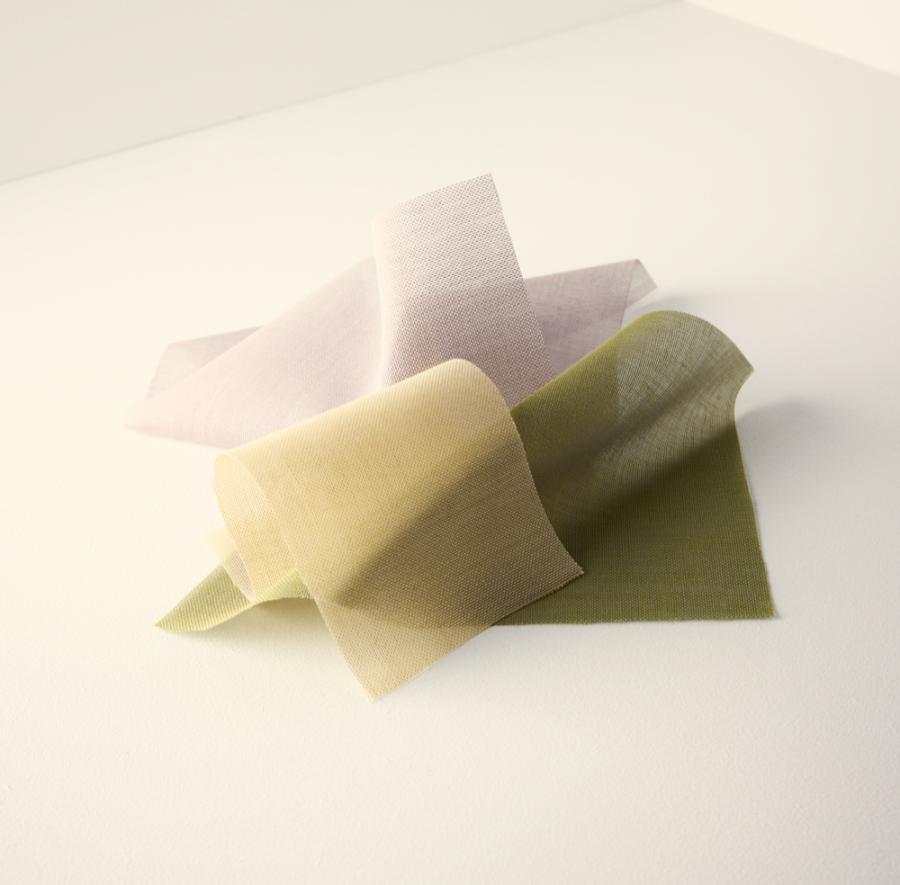
In sheers and semi-transparent fabrics, dark colours screen more glare and give a clearer view out. Pale colours bring in more daylight and reflect more sun. Two Interact colours show the control possible:
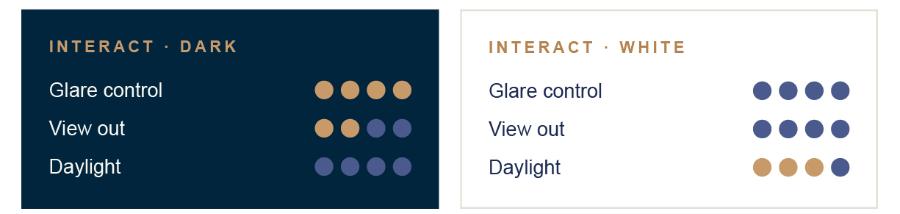
So the colour picked to suit the scheme also sets the glare, the view and the daylight that come through the window.
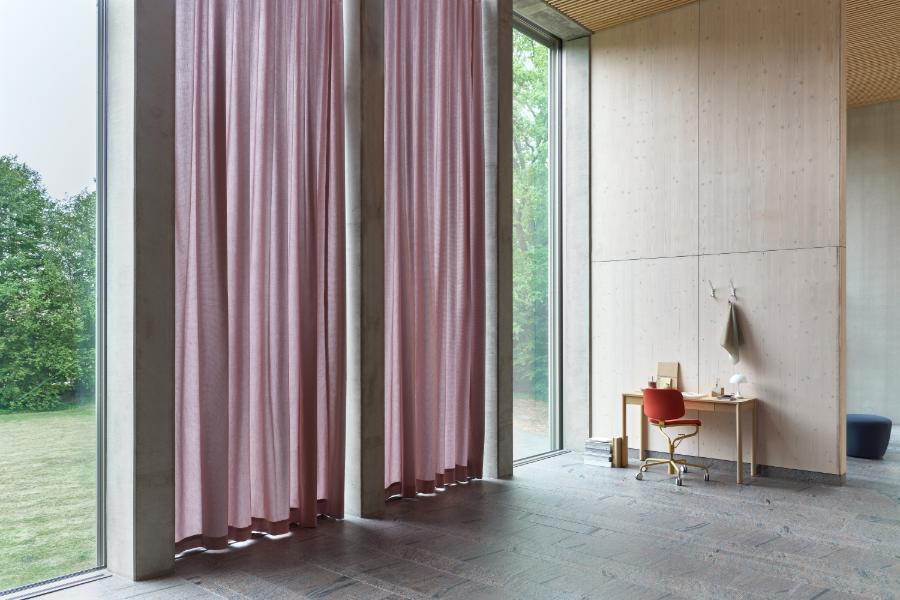
Curtains can adapt as the daylight shifts
Roller blinds work in one dimension, up and down. Office studies find manual blinds are moved about once a week, and mostly sit fully up or fully down. In one UK office, 60 of 64 blinds stayed at the same height for 40 days.
Curtains bring layers to the window: a sheer for the day, a denser fabric when the sun strikes. Sound-rated fabrics absorb noise, and the drape softens the room. Motorised tracks go further, opening and closing curtains with the daylight, on a sensor or a schedule.
The window orientation sets the challenge
Across Australia and New Zealand* the sun sits in the northern sky.

North
The most sun through the day
Look for
Glare control and reflection
Choose
Sheer layered with full coverage, pale or reflective back
For example
Dual Reflect layered with Mint

South
Soft, even daylight
Look for
Glare control and reflection
Choose
Pale transparent sheer
For example

East
Morning sun, with more heat in warmer climates
Look for
Daylight and view out
Choose
Pale to mid transparent sheer
For example

West
Low afternoon sun, straight into the eyes
Look for
Glare control with view out
Choose
Dark semi-transparent
For example
Interact in a dark colour
*North of the Tropic of Capricorn, which runs through Rockhampton, the sun passes overhead and sits in the southern sky for part of summer.
Three curtains, three windows
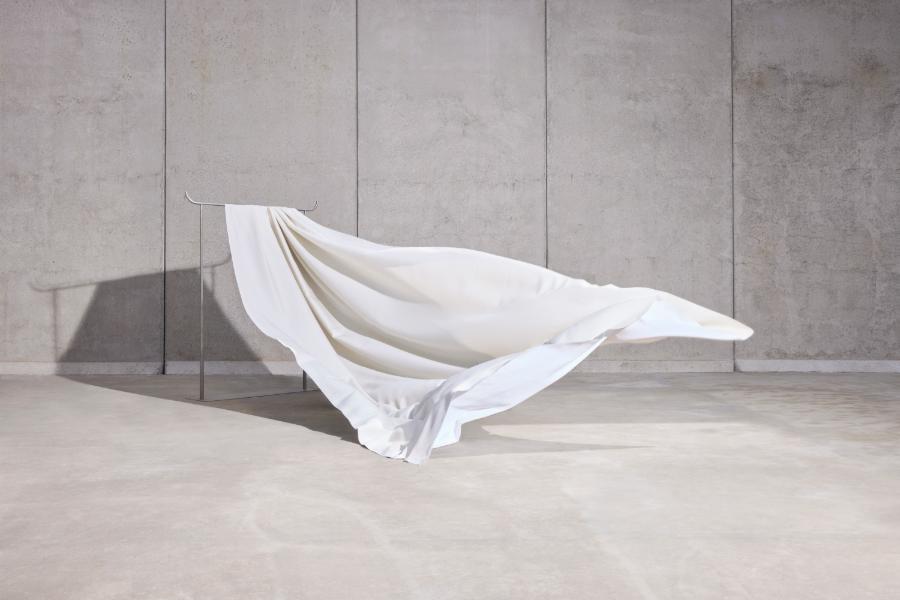
Dual Reflect: North
A coloured face to the room and a white back that reflects at least 75% of sunlight. Layer it with Mint.



- Full coverage
- Glare control up to 3
- Sound Class B
- Seven colours
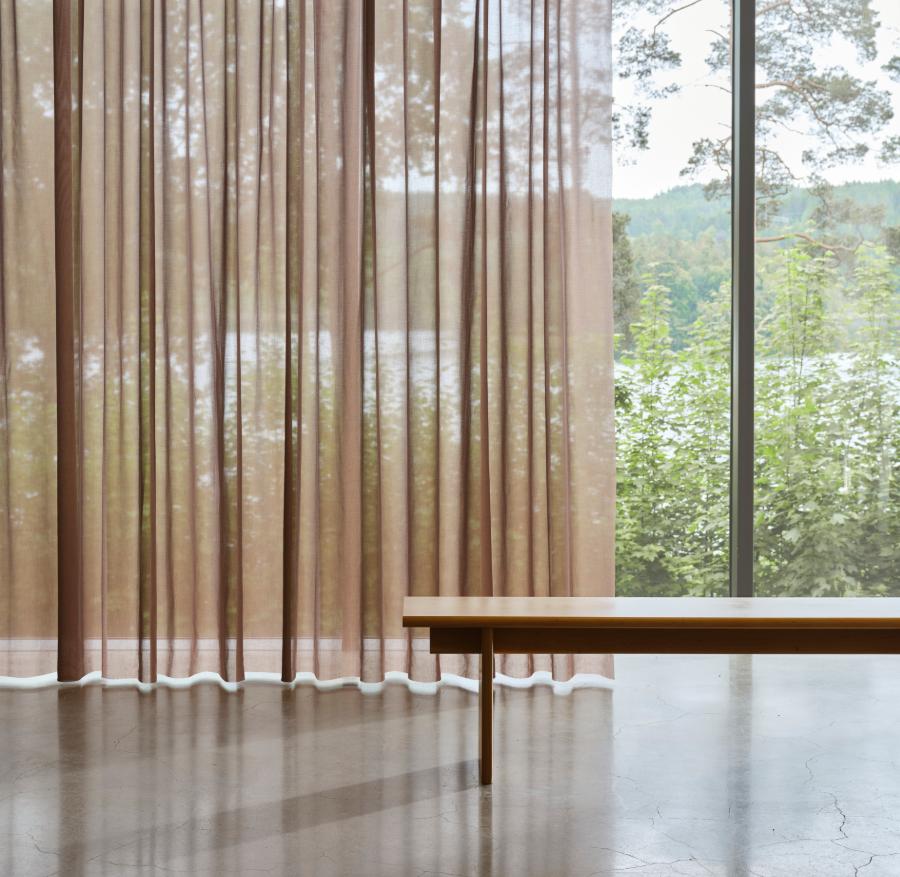
Mint: South & East
A transparent sheer that welcomes daylight and keeps the view.






- 90 g/m²
- Daylight up to 4
- View out up to 3
- 50 colours
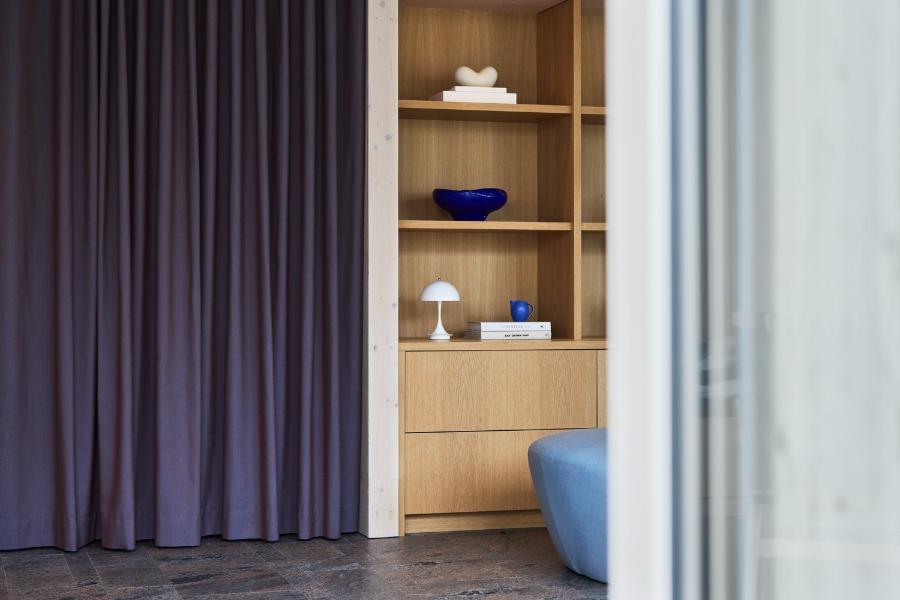
Interact: West
A semi-transparent jacquard that screens low sun and absorbs sound.



- Glare control up to 4
- View out up to 2
- Sound Class C
- 10 colours
Good to know
Where are the scores
Ask us, and we’ll send the scores for the Svensson curtains you’re considering.
And heat
A reflective back sends sunlight back toward the window, and close-fitting curtains hold warmth in on winter nights. Curtains work alongside external shading.
At night
A denser curtain drawn over the sheer gives privacy after dark.
Fire
The Svensson range is predominantly Trevira CS, with the flame retardancy built into the fibre.
From the blog
Since 1977 Svensson has worked with daylight in greenhouses, where every percent of light counts. It started with a pile of leftover curtain fabric.
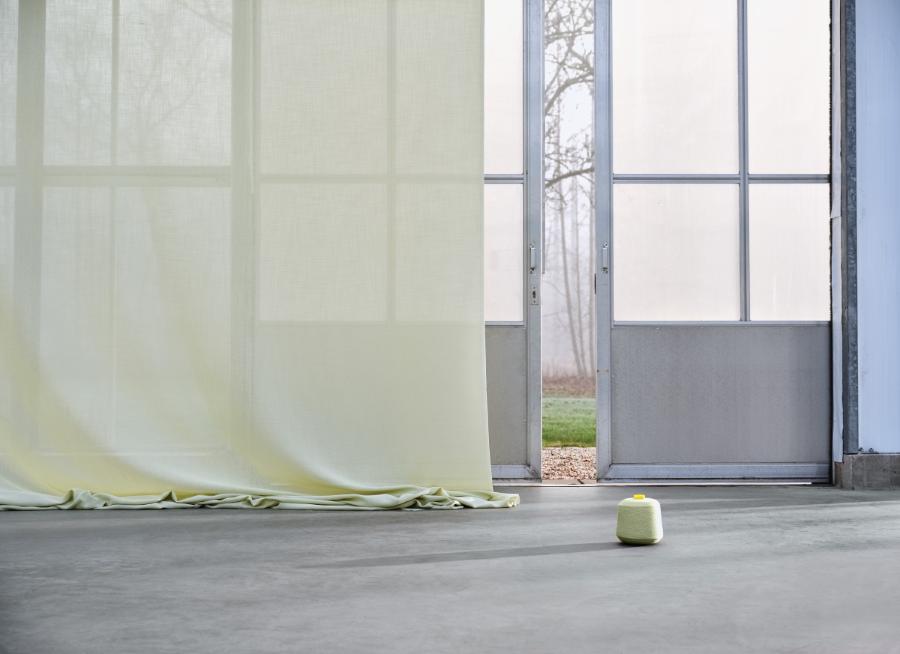
Every curtain shapes the daylight.
Svensson measures how.
Next Issue
Designtex, specifying for disinfection.