Hand-painted silk · Misha Milano
Designed in Milan. Painted in Shanghai.
Painted.
Not printed.
Two cities, one wall.
Long before anyone worked out how to reproduce a picture, someone painted one. Silk painting is among the oldest techniques still in continuous practice — everything that followed, woodblock to roller to digital, was a way of multiplying what a hand did first.
Misha still does it the original way, and the name explains how. Designs developed in Milan by architect Chiara Enrico with her sister Anna; panels painted by Chinese artisans in Shanghai.
It isn’t the first time two cities have made one wall. In the 1700s Canton painted and London hung, and the two never met. What’s different now is that they talk.
A panel takes an artisan weeks. Gradients laid in by hand until the colour lightens to something closer to watercolour than paint — years to learn, and the thing that separates this from any European hand-painting.
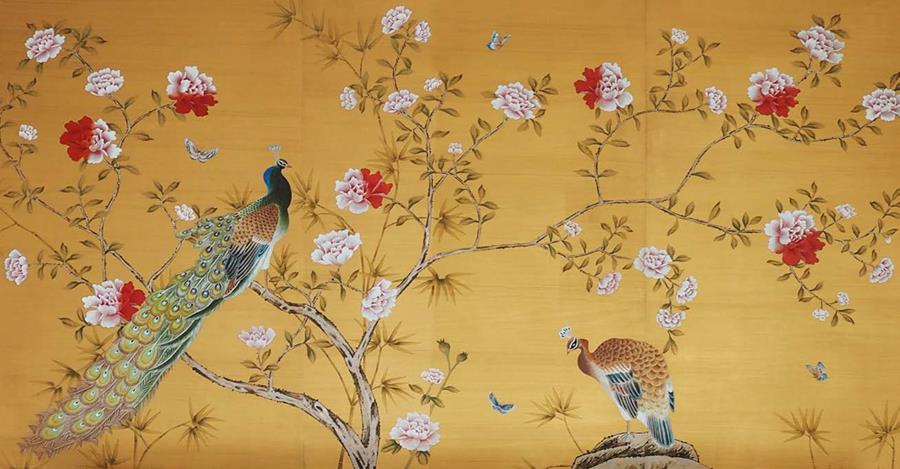
A garden, resized
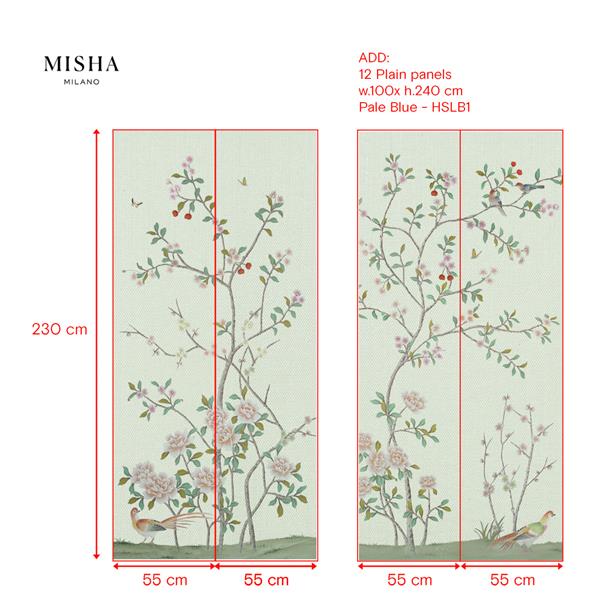
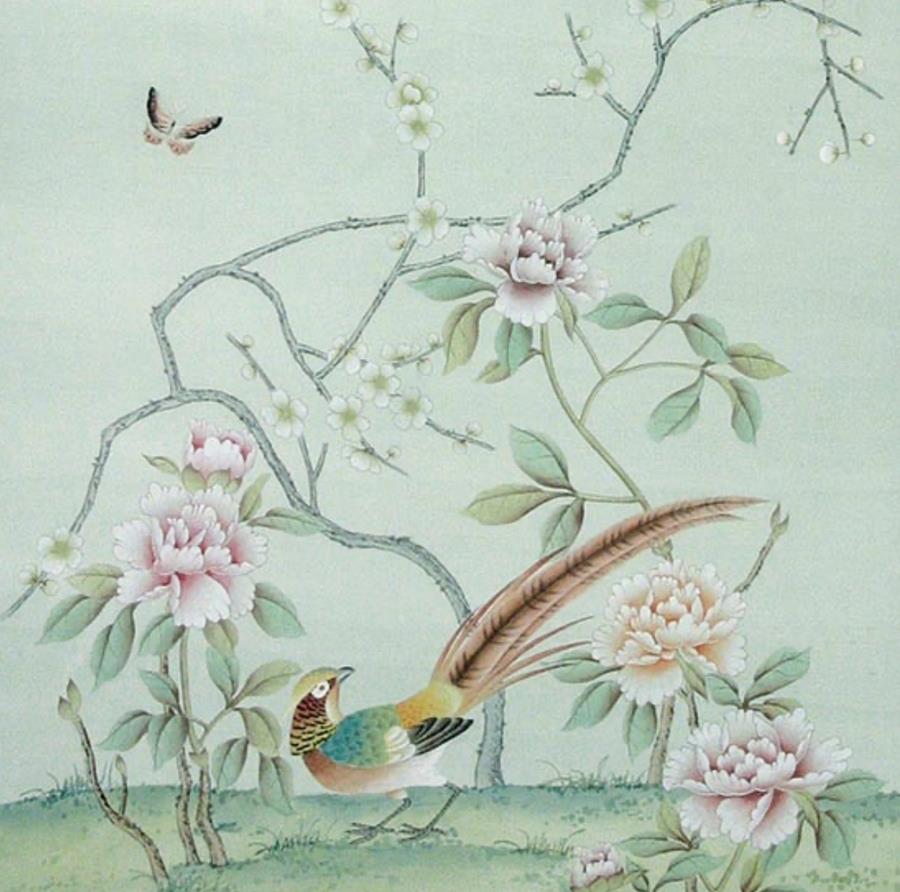
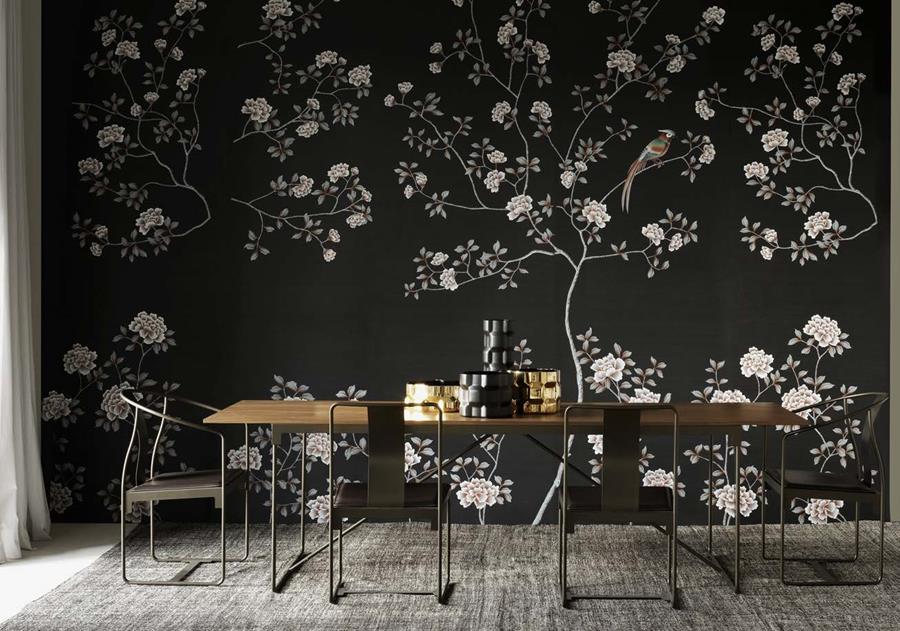
Chinese Garden with Pheasants — cherry trees, small peonies, pheasants moving through the undergrowth. Published as nine panels, 90cm wide and 270 high, on Mist Green pure silk.
A private Sydney residence took four of them. At 55cm wide and 230 high. On a pale blue that isn’t in the range.
Twelve plain panels in the same blue carried the colour around the rest of the room.
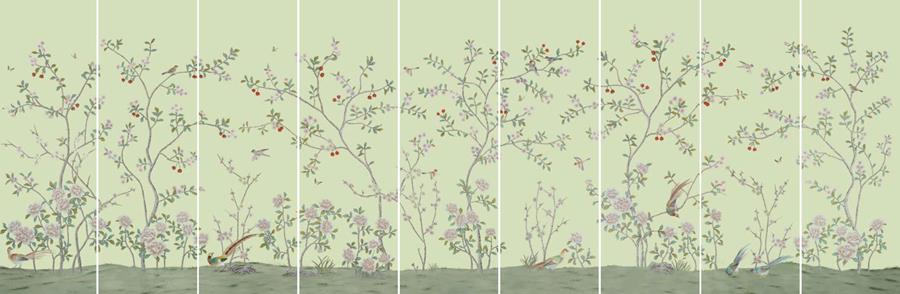
Same garden. Different panels, different size, different colour, different wall — repainted by hand for that house.
You don’t specify this.
You commission it.
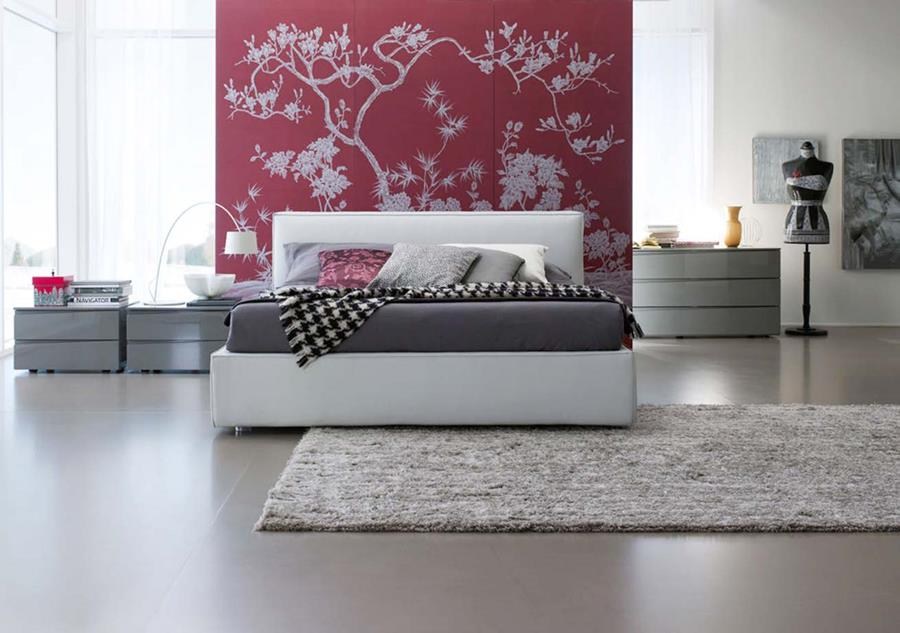
This is not wallpaper. It’s an artistic creation, made to sit alongside the commissioned pieces in a project.
It just happens to install like a wallcovering.
The layup is where it starts.
Every design arrives as a drawing — numbered panels showing how the composition breaks across the space. That’s a starting point, not a specification. Panels can be reselected, resized and recoloured, and where the artwork stops, plain panels in the same ground carry the surface on around the room.
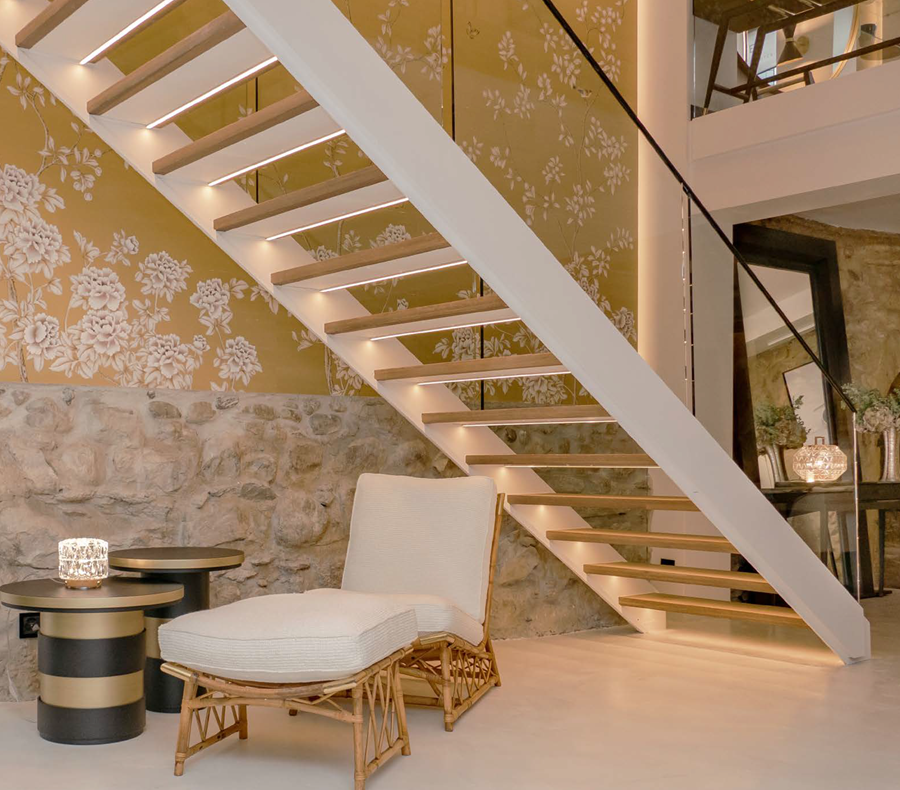
It’s how a staircase gets done: eight painted panels running the flight, then plain silk cut to three heights to follow the rise.
The papers from Canton were supplied exactly this way. Nobody has improved on it in two hundred and fifty years.
Good to know
Is it fire rated?
No, and it isn’t specified to be. This is artwork on a wall, not a corridor lining. Specify it where a painting would go.
What is it painted on?
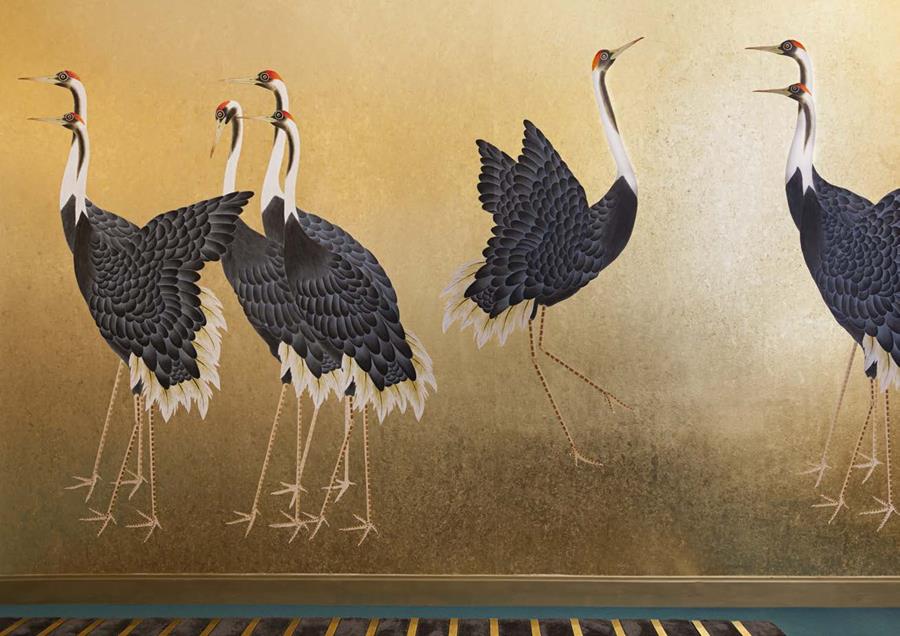
Pure silk, Dupion with its irregular shantung weave, the fine gauze of Japanese silk, or Double Silk — a thin shantung over a metallic base that shifts with the light. Or hand-applied metal leaf. Painted in natural pigments, then backed with paper so it hangs like a wallcovering.
What’s the embroidery?
Silk thread worked into certain figures. The slight thickness catches light the way antique tapestry does — the figures lift off the surface.
Can we change the colour?
Extensively. Japanese Silk alone runs past fifty grounds, Winter Wind through to Lamp Black — and the painting is coloured separately again.
How do we size it?
Send us the wall. Misha returns a layup with every panel dimensioned to suit, and plain panels for the rest of the space.
Who installs it?
A highly skilled wallcovering installer. Precise work — hand-painted silk, 15mm linkups, no second chances.
Lead time?
Painted to order. Plan it in early, like any commissioned piece.
Samples?
Through Hume Internationale — the only licensed source in Australia and New Zealand.
Misha.
Every stroke decided by hand.
Print reproduces decisions.
Painting makes them, one at a time.
Four walls.
Four answers.
Every wall asks a different question. These are the four we hear most.
A corridor that has to survive a decade
Commercial wallcovering. Group 1 fire rated, colour through the material so wear has nothing to expose.
An image that has to be yours
Digital print. Any artwork, on a commercial base, from one square metre.
A texture nobody else has
Custom traditional print. Commission the colour and the emboss, from 500 linear metres.
A wall that has to be a piece
Hand-painted silk.
One supplier. Many hats.