
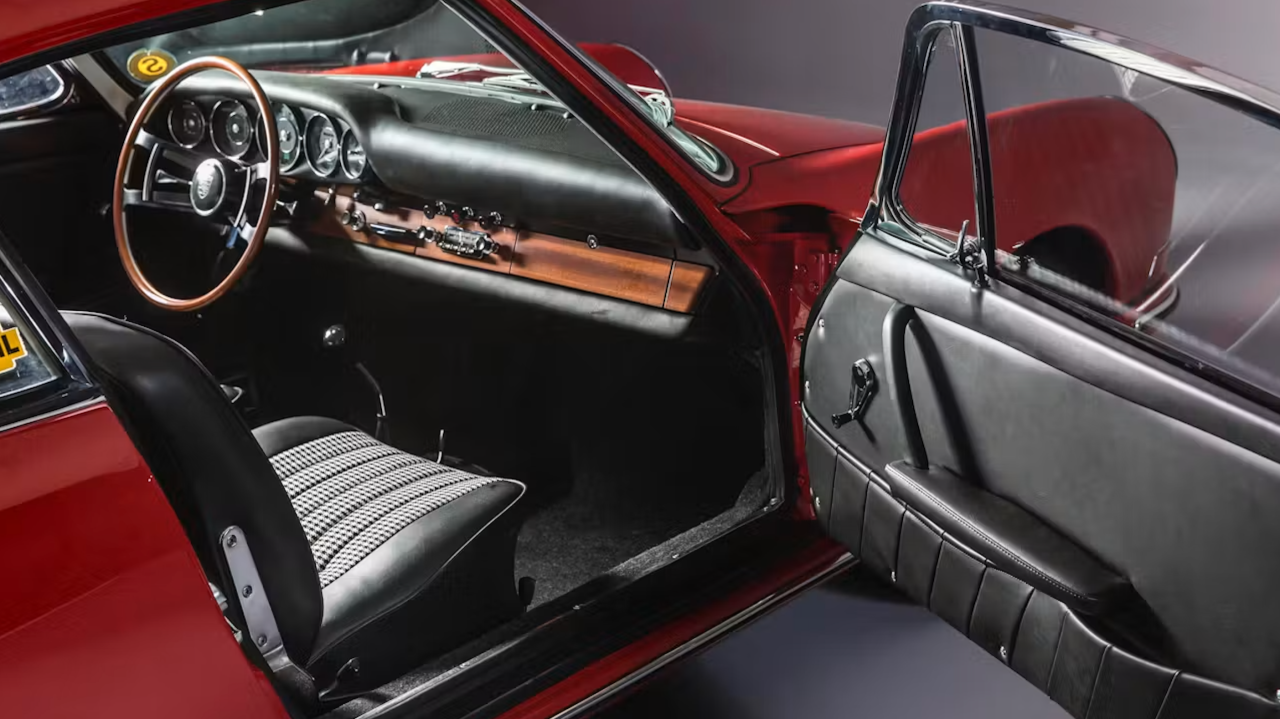
Pepita, Porsche and Gabriel’s Go Couture: the origin story of a design classic
Many design classics begin as working things. They are taken up by people who admire them, adapted by designers and kept in use for generations.
The pepita check followed that path. It began as the plaid of shepherds in the Scottish Borders, was taken into fashion by Walter Scott, took its German name from a Spanish dancer and reached Porsche seats in 1963, where it is still mistaken for houndstooth. Gabriel describes its Go Couture upholstery fabric as “inspired by the fashion world’s classic pepita checks”. This is the story behind that check.
A shepherd’s check
The shepherds of southern Scotland and northern England wore a long wool plaid called a maud. It was woven in a small black-and-white check, known as shepherd’s check or Border tartan. Walter Scott described it as “a plaid with a very small cheque of black and grey”.
Scott brought the check to a wider audience. From the 1820s he, the poet James Hogg and other Border writers wore the plaid in public and were painted in it. He also wore trousers of the check, which started a fashion for checked clothing in London.
From the Borders to the Highland estates
The shepherd’s check became the starting point for Scotland’s district checks. Around 1835 Janie Ellice, who rented part of the Glen Feshie estate in the Highlands, added a scarlet overcheck to it and created the first of them. The Glen Urquhart check followed in the 1840s, woven for the Countess of Seafield’s gamekeepers. Worn by the Prince of Wales, later Edward VII, it became known as the Prince of Wales check.
A name from the stage
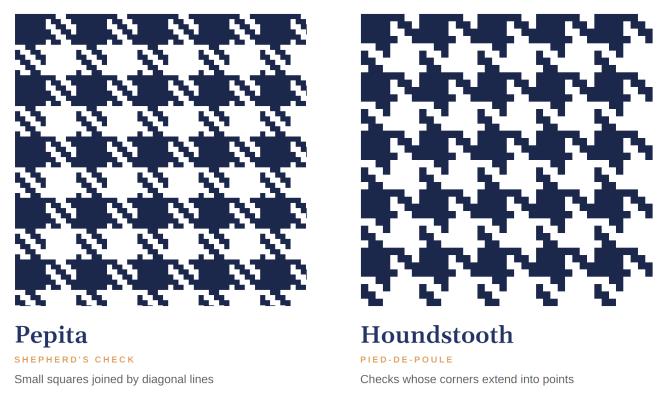
In German-speaking Europe the shepherd’s check is called Pepita. The name is credited to Pepita de Oliva, the stage name of Josefa Durán y Ortega, a Spanish dancer who performed across Europe in the mid-19th century and is said to have worn the pattern. Johann Strauss II wrote the Pepita-Polka for her in Vienna. In 1852 an actress at Vienna’s Theater in der Josefstadt copied her style in a play called Die falsche Pepita, The False Pepita.
A second account traces the name to pepitas, Spanish for seeds, which the small checks resemble. Pepita remains the German name for shepherd’s check.
Pepita and houndstooth
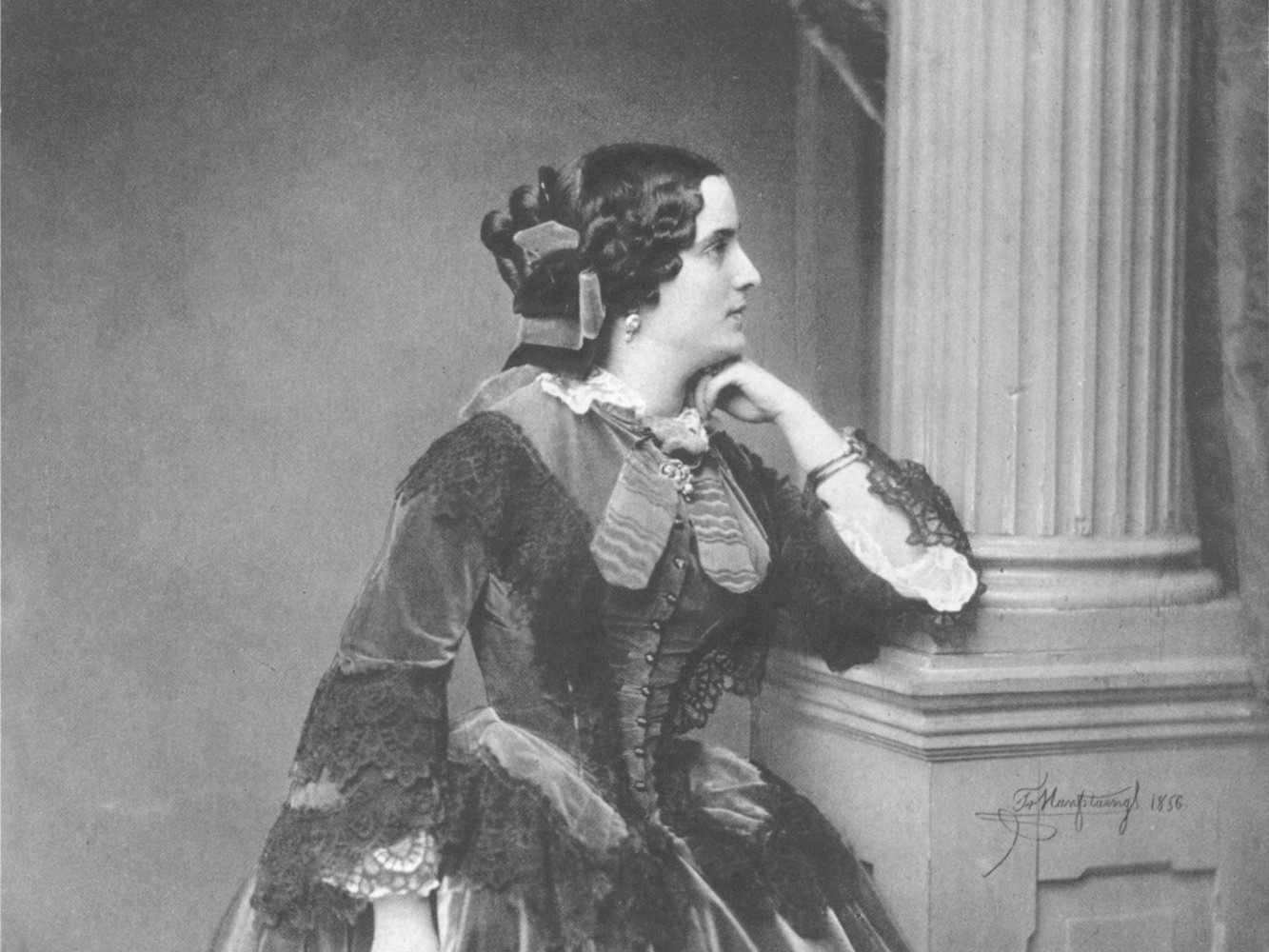
Pepita has a close relative in houndstooth, called pied-de-poule in French and Hahnentritt in German. Both are two-colour checks. In pepita the small squares are joined by diagonal lines. In houndstooth the corners of each check extend into points, which gives the pattern its jagged edge.
Into couture
Christian Dior made houndstooth one of the signatures of his house. He made his first houndstooth dress in 1939, while working for the couturier Robert Piguet. From his first collection in 1947 the pattern moved from men’s tailoring into his women’s collections, and houndstooth was engraved on the glass of the Miss Dior bottle.
The check on the Porsche seat
In 1963 the pepita check reached upholstery. Recaro, founded that year by the Reutter family, first produced a Pepita seat fabric in December 1963. Porsche offered it on the 356 from 1963 and on the 911 from 1965.
The pattern on those seats is widely called houndstooth. Recaro, which made the seats, says it is pepita. Ulrich Andree, speaking for Recaro, told Hagerty magazine: “The actual Houndstooth pattern was never used in an official Porsche seat or a Recaro seat made for Porsche.” Hagerty puts the difference simply: houndstooth looks like little windmills, and pepita is made up of interconnected squares.
Porsche calls it Pepita. In 2025 it reissued the original fabric, in black and white and in red, black and white, for owners restoring their cars.
Go Couture
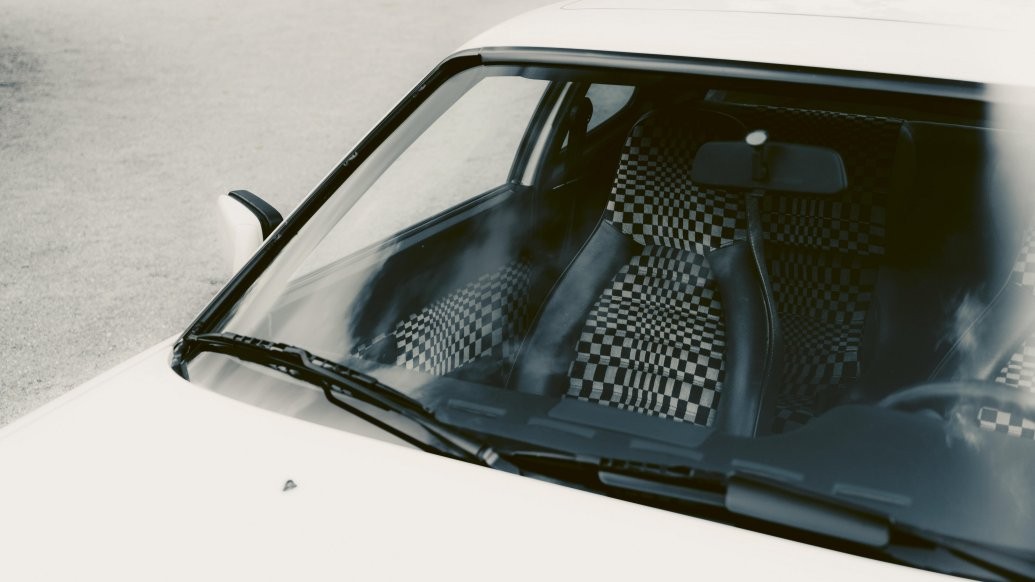
Go Couture brings the pepita check to contract upholstery. It was designed by Inger Mosholt Nielsen, who trained in textile design at the Kolding School of Design in Denmark and later headed its textiles department. She joined Gabriel as a designer in 2000 and was its creative director from 2016 to 2020. Her work for Gabriel also includes Step, Step Melange and Savoy.
Go Couture sits in the Go family alongside Go Uni and Go Check. The fabric is 100% Trevira CS, so its flame retardancy is part of the fibre. It comes in 39 colours, is rated at 80,000 Martindale and can be washed at up to 74°C. It carries the EU Ecolabel and is Cradle to Cradle Certified Bronze.
Go Couture is available in Australia and New Zealand through Hume Internationale.
Sources
- Gabriel – Go Couture
- Wikipedia – Maud (plaid)
- Wikipedia – Border tartan
- Permanent Style – the origins of tweed patterns
- Gentleman’s Gazette – Tweed guide
- Wikipedia – Glen plaid
- Wikipedia – Pepita de Oliva
- TexSite – Pepita
- Galatea – Hahnentritt, Pepita, Vichy
- Fragrantica – Miss Dior bottle
- Hagerty – Porsche and houndstooth seats
- Porsche Newsroom – historic fabrics reissued
- Porsche – What is Porsche Pepita?